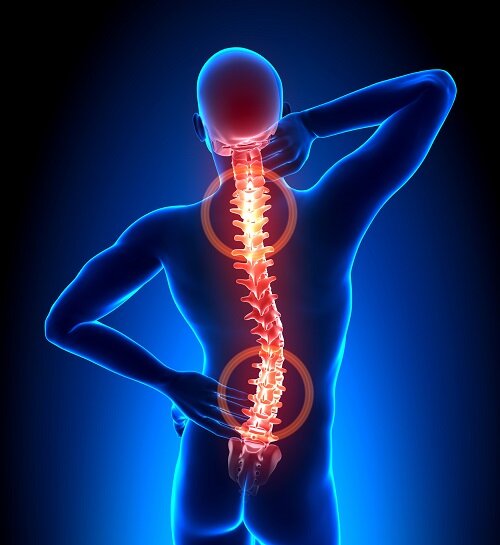
Back pain (in English "back pain") generally refers to the sensation of pain in the posterior part of the trunk. Back pain is a very common disorder, which can have many risk factors and causes. The treatment of back pain can be entirely medical, while prevention mainly concerns lifestyle. Among the various precautions, there is certainly also the choice of mattress. In fact, we spend as much as 1/3 of our time in bed, often in positions that have little to do with comfort. Below we will further explore both the essential notions concerning back pain and the criteria for choosing a mattress to combat this disorder. Back pain is a common problem. 90% of people have suffered, suffer, or will suffer from back pain, and as many as 1 in 2 experience it annually. In the United States, back pain has an incidence of 95%. It is the most common cause of chronic pain and contributes significantly to missed work and disability. Most people treat back pain on their own. When the cause is due to the manifestation of herniated discs and stenosis, rest, localized injections, or surgical interventions may be recommended, which after a year offer almost overlapping results in pain moderation. In the USA, acute low back pain is the fifth most frequent cause of medical visits and causes 40% of work absences. It is the leading cause of disability worldwide. There are different types of back pain and different ways to classify them. The first criterion is the area; based on the affected area, back pain can be macroscopically divided into: Neck pain (cervical), considered an independent entity compared to the various back pains, can still have a similar or even almost identical etiology. Low back pain is the most common form of back pain in the world, as the lumbar area (roughly between L1 and L5) supports all the weight of the upper part of the body. Another useful criterion for differentiation is the duration of the symptom. Back pain can in fact manifest as: depending on how long the pain lasts. A third parameter for cataloging back pain concerns the type of pain, which can be: The discomfort can radiate to the arms and hands, as well as to the legs and feet, and may include sensations of numbness and weakness in the limbs. Heavy work, obesity, a sedentary lifestyle, and lack of physical exercise can increase the risk of back pain. Smokers are more likely to have back pain than others. Poor posture in daily life, a poor sleeping position, and weight gain during pregnancy are also very important risk factors. Generally speaking, overall fatigue can worsen the intensity and duration of the pain. Some studies suggest that psychosocial factors such as work stress and dysfunctional family relationships are more closely correlated with back pain than structural abnormalities revealed in X-rays and other medical radiographs. Most back pain detected during primary care is nonspecific and has no clearly identifiable causes. The factors that most frequently cause back pain include: There is moderate-quality evidence suggesting that the combination of postural education and physical exercise can reduce the risk of developing an episode of low back pain. Low-quality evidence, on the other hand, suggests that physical exercise alone may be a possible deterrent to the risk of developing back pain. With regard to postural education, it is undeniable that the position during sleep can also affect the manifestation of back pain. Sometimes, this is the result of one or more lifestyle mistakes, as thoroughly discussed in the following chapter. Other times, however, it is not possible to effectively intervene in one's behavior while sleeping, and the choice of the right mattress plays a fundamental role, which can lead to a highly significant improvement in symptoms. In fact, one's anthropometric characteristics, subjective needs, and the position adopted during sleep should specifically guide the choice of mattress – on which, remember, you spend at least 1/3 of the entire day. The choice of the most suitable mattress is always quite difficult. This is because, among both laypeople and professionals, there are many widespread and conflicting theories and opinions. So, which mattress to choose? The answer is, alas, rather obvious, but in fact it greatly narrows the field of research: the one most suitable for your subjective anthropometric characteristics (weight, back shape, habits, etc.), the possible presence of paramorphisms and dysmorphisms of the spine, joint discomfort in the cervical or shoulders, and your specific way of sleeping (especially the position(s)). This brief premise is already enough to understand how choosing a mattress can be something extremely personal. Beyond hardness, which would be better defined as stiffness, mattresses can be classified according to their design and materials. It is therefore advisable to consider the product's technical data sheet. Let's start by saying a few words about the most important characteristic, or perhaps just the best known, of any mattress: hardness – or rather stiffness. Sleeping on a new mattress compared to one at least 5 years old can improve quality by 62% and reduce back pain by 55.3%. Bonnel spring mattresses (rigid) Internal spring mattresses (bonnel) are an invention that changed the way we sleep. They contain inside them coils, a real metal cone with opposing spirals. This mattress is ideal for those seeking firmness, solidity, and support, and for those who move a lot during the night. It is also suitable for those suffering from back pain and looking for firm support. Pocket spring mattresses are, to date, the most popular type of spring mattress, as they offer extra comfort and transfer less force, adapting perfectly to the body. In addition to extraordinary comfort, they are an ideal solution for those suffering from back pain. Latex mattresses are among the most widespread and popular, thanks to high comfort and extreme longevity. Latex adapts directly to the body, creating ideal pressures that respect its morphology. Many people with back pain find them suitable. Introduction
Back Pain
Prevalence of back pain
Types of back pain
Risk factors for back pain
Causes of back pain
Prevention of back pain
Mattress
Which mattress to choose?
Mattress: hard or soft?
Pocket spring mattresses
Latex mattresses
...natural raw materials live with you through the seasons and it will be a pleasure to enjoy a fresh dryness that only cotton can give during the summer and an extraordinary and pleasant warmth that only wool can provide.
Well-being is a lifestyle!

EVERY DAY WE CREATE OUR PRODUCTS COMMITTED TO REDUCING ARTIFICIAL RAW MATERIALS FOR YOUR WELL-BEING AND THAT OF THE ENVIRONMENT

Mattress and back pain
Mattress and back pain
2021-05-08 23:14
2021-05-08 23:14
Array() no author 92357
materassi-e-mal-dischiena,
EVERY DAY WE CREATE OUR PRODUCTS COMMITTED TO REDUCING ARTIFICIAL RAW MATERIALS FOR YOUR WELL-BEING AND THAT OF THE ENVIRONMENT